Shades of green

 Clash Royale CLAN TAG#URR8PPP
 | Green | |
|---|---|
 | |
| Spectral coordinates | |
| Wavelength | 520–570 nm |
| Frequency | ~575–525 THz |
 Color coordinates Color coordinates | |
sRGBB (r, g, b) | (0, 128, 0) |
| HSV (h, s, v) | (120°, 100%, 50%) |
| Source | W3C TR CSS3 Color Module[1] |
B: Normalized to [0–255] (byte) | |
Some tints and shades of green | |
Varieties of the color green may differ in hue, chroma (also called saturation or intensity) or lightness (or value, tone, or brightness), or in two or three of these qualities. Variations in value are also called tints and shades, a tint being a green or other hue mixed with white, a shade being mixed with black. A large selection of these various colors is shown below.

Green Moray eel (Gymnothorax funebris)
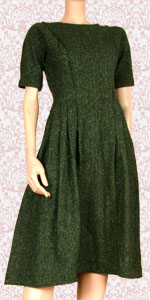
Green dress
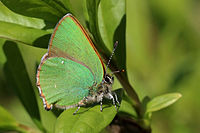
Green hairstreak
Contents
1 Green in nature
1.1 Artichoke
1.2 Artichoke green (Pantone)
1.3 Asparagus
1.4 Avocado
1.5 Dark green
1.6 Fern green
1.7 Forest green
1.8 Green earth
1.9 Hooker's green
1.10 Jungle green
1.11 Laurel green
1.12 Light green
1.13 Mantis
1.14 Mint green
1.15 Moss green
1.16 Dark moss green
1.17 Myrtle green
1.18 Pine green
1.19 Reseda green
1.20 Sap green
1.21 Shamrock green (Irish green)
1.22 Tea green
1.23 Teal
1.24 Olive
2 Computer web color greens
2.1 Green
2.2 Green (HTML/CSS color)
2.3 Dark green (X11)
3 Additional definitions of green
3.1 Green (CMYK) (pigment green)
3.2 Green (NCS) (psychological primary green)
3.3 Green (Munsell)
3.4 Green (Pantone)
3.5 Green (Crayola)
4 Other notable green colors
4.1 Army green
4.2 Bottle green
4.3 Bright green
4.4 Bright mint
4.5 Brunswick green
4.6 Cal Poly Pomona green
4.7 Castleton green
4.8 Celadon
4.9 Celadon green
4.10 Dark pastel green
4.11 Dartmouth green
4.12 Emerald
4.13 Feldgrau
4.14 GO Transit green
4.15 Green-yellow
4.16 Harlequin
4.17 Hunter green
4.18 India green
4.19 Islamic green
4.20 Jade
4.21 Kelly green
4.22 Malachite
4.23 Midnight green
4.24 MSU green
4.25 Neon green
4.26 Office green
4.27 Pakistan green
4.28 Paris green
4.29 Persian green
4.30 Rifle green
4.31 Russian green
4.32 Sacramento State green
4.33 Screamin' green
4.34 Sea green
4.35 SGBUS green
4.36 Spanish green
4.37 UNT green
4.38 UP forest green
5 Green in human culture
6 See also
7 References
Green in nature
Green is common in nature, especially in plants. Many plants are green mainly because of a complex chemical known as chlorophyll which is involved in photosynthesis.[2] Many shades of green have been named after plants or are related to plants. Due to varying ratios of chlorophylls (and different amounts as well as other plant pigments being present), the plant kingdom exhibits many shades of green in both hue (true color) and value (lightness/darkness). The chlorophylls in living plants have distinctive green colors, while dried or cooked portions of plants are different shades of green due to the chlorophyll molecules losing their inner magnesium ion.
Artichoke

An artichoke
| Artichoke | |
|---|---|
| Color coordinates | |
| Hex triplet | #8F9779 |
sRGBB (r, g, b) | (143, 151, 121) |
| CMYKH (c, m, y, k) | (5, 0, 20, 41) |
| HSV (h, s, v) | (76°, 20%, 59%) |
| Source | ISCC NBS[3] |
B: Normalized to [0–255] (byte) H: Normalized to [0–100] (hundred) | |
Artichoke is a color that is a representation of the color of a raw fresh uncooked artichoke. Another name for this color is artichoke green.
The first recorded use of "artichoke green" as a color name in English was in 1905.[4]
Artichoke green (Pantone)
| Artichoke green (Pantone) | |
|---|---|
| Color coordinates | |
| Hex triplet | #4B6F44 |
sRGBB (r, g, b) | (75, 111, 68) |
| Source | Pantone |
B: Normalized to [0–255] (byte) | |
This is the color called artichoke green in Pantone. The source is Pantone 18-0125 TPX[5]
Asparagus
| Asparagus | |
|---|---|
| Color coordinates | |
| Hex triplet | #87A96B |
sRGBB (r, g, b) | (135, 169, 107) |
| CMYKH (c, m, y, k) | (20, 0, 37, 34) |
| HSV (h, s, v) | (93°, 37%, 66%) |
| Source | Crayola |
B: Normalized to [0–255] (byte) H: Normalized to [0–100] (hundred) | |
Asparagus is a tone of green that is named after the vegetable. Crayola created this color in 1993 as one of the 16 to be named in the Name the Color Contest.
It is also the color of a wild asparagus plant blowing in the wind of the 1949 classic film Sands of Iwo Jima.

Bundled stalks of asparagus
Another name for this color is asparagus green. The first recorded use of "asparagus green" as a color name in English was in 1805.[6]
Avocado
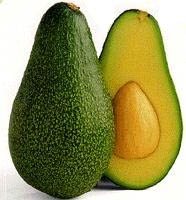
An avocado
| Avocado | |
|---|---|
| Color coordinates | |
| Hex triplet | #568203 |
sRGBB (r, g, b) | (86, 130, 3) |
| CMYKH (c, m, y, k) | (34, 0, 98, 49) |
| HSV (h, s, v) | (81°, 98%, 51%) |
| Source | Pourpre.com |
B: Normalized to [0–255] (byte) H: Normalized to [0–100] (hundred) | |
Avocado is a color that is a representation of the color of the outer surface of an avocado.
The color avocado is a dark yellow-green color.
Avocado was a common color for metal surfaces (including automobiles and household appliances), as well as the color harvest gold, during the whole decade of the 1970s. They were both also popular colors for shag carpets. Both colors went out of style by the early 1980s.
Dark green
| Dark green | |
|---|---|
| Color coordinates | |
| Hex triplet | #013220 |
sRGBB (r, g, b) | (1, 50, 32) |
| CMYKH (c, m, y, k) | (98, 0, 36, 80) |
| HSV (h, s, v) | (158°, 98%, %) |
| Source | Encycolorpedia |
B: Normalized to [0–255] (byte) H: Normalized to [0–100] (hundred) | |
Dark green is a dark shade of green. A different shade of green has been designated as "dark green (X11)" for certain computer uses.
Fern green

Ferns at Muir Woods, California
| Fern green | |
|---|---|
| Color coordinates | |
| Hex triplet | #4F7942 |
sRGBB (r, g, b) | (79, 121, 66) |
| CMYKH (c, m, y, k) | (71, 32, 90, 18) |
| HSV (h, s, v) | (106°, 45%, 47%) |
| Source | [7] |
B: Normalized to [0–255] (byte) H: Normalized to [0–100] (hundred) | |
| Fern | |
|---|---|
| Color coordinates | |
| Hex triplet | #71BC78 |
sRGBB (r, g, b) | (113, 188, 120) |
| CMYKH (c, m, y, k) | (40, 0, 36, 26) |
| HSV (h, s, v) | (126°, 40%, 74%) |
| Source | Crayola |
B: Normalized to [0–255] (byte) H: Normalized to [0–100] (hundred) | |
Fern green is a color that resembles ferns. A Crayola crayon named fern was created in 1998, which is a lighter shade of the top color shown on the right.
The first recorded use of fern green as a color name in English was in 1902.[8]
Forest green
| Forest green | |
|---|---|
| Color coordinates | |
| Hex triplet | #228B22 |
sRGBB (r, g, b) | (34, 139, 34) |
| CMYKH (c, m, y, k) | (100, 50, 100, 50) |
| HSV (h, s, v) | (120°, 76%, 55%) |
| Source | X11 |
B: Normalized to [0–255] (byte) H: Normalized to [0–100] (hundred) | |

Hedera in Hyde Park, Sydney
Forest green refers to a green color said to resemble the color of the trees and other plants in a forest.[9]
The first recorded use of forest green as the name of a color in the English language was in 1810.[10]
Green earth
| Green earth | |
|---|---|
| Color coordinates | |
| Hex triplet | #DADD98 |
sRGBB (r, g, b) | (218, 221, 152) |
| Source | Derwent[11] |
B: Normalized to [0–255] (byte) | |
Displayed at right is the color green earth.
Hooker's green
| Hooker's green | |
|---|---|
| Color coordinates | |
| Hex triplet | #49796B |
sRGBB (r, g, b) | (73, 121, 107) |
| CMYKH (c, m, y, k) | (73, 36, 59, 15) |
| HSV (h, s, v) | (163°, 39.7%, 47.5%) |
| Source | Winsor & Newton[12] |
B: Normalized to [0–255] (byte) H: Normalized to [0–100] (hundred) | |
Hooker's green is a dark green color created by mixing Prussian blue and Gamboge. It is displayed on the right.
Hooker's green takes its name from botanical artist William Hooker (1779–1832) who first created a special pigment for leaves.[13][14]
Jungle green
| Jungle green | |
|---|---|
| Color coordinates | |
| Hex triplet | #29AB87 |
sRGBB (r, g, b) | (41, 171, 135) |
| CMYKH (c, m, y, k) | (50, 0, 50, 2) |
| HSV (h, s, v) | (120°, 80%, 70%) |
| Source | Crayola |
B: Normalized to [0–255] (byte) H: Normalized to [0–100] (hundred) | |
Displayed at right is the color jungle green. In 1990, Crayola named and formulated this specific tone of jungle green.
The first recorded use of jungle green as a name of a color in the English language was in 1926.[15]
Laurel green
| Laurel green | |
|---|---|
| Color coordinates | |
| Hex triplet | #A9BA9D |
sRGBB (r, g, b) | (169, 186, 157) |
| CMYKH (c, m, y, k) | (9, 0, 16, 27) |
| HSV (h, s, v) | (95°, 16%, 73%) |
| Source | Maerz and Paul[16] |
B: Normalized to [0–255] (byte) H: Normalized to [0–100] (hundred) | |
Laurel green is a medium light hue of greenish gray similar to asparagus, but lighter.
The first recorded use of laurel green as a name of a color in the English language was in 1705.[17]
Light green
| Light green | |
|---|---|
| Color coordinates | |
| Hex triplet | #90EE90 |
sRGBB (r, g, b) | (144, 238, 144) |
| CMYKH (c, m, y, k) | (40, 0, 40, 7) |
| HSV (h, s, v) | (120°, 39%, 93%) |
| Source | X11[1] |
B: Normalized to [0–255] (byte) H: Normalized to [0–100] (hundred) | |
Light green is a light tint of green.
"Light green environmentalism" is a concept that adherence to environmentalism is best promoted as an individual consumer choice.[18] The term lite green environmentalism is used by environmentalists as a synonym for greenwashing.
Mantis

A praying mantis
| Mantis | |
|---|---|
| Color coordinates | |
| Hex triplet | #74C365 |
sRGBB (r, g, b) | (116, 195, 101) |
| CMYKH (c, m, y, k) | (41, 0, 48, 24) |
| HSV (h, s, v) | (110°, 48%, 77%) |
| Source | Xona.com color list |
B: Normalized to [0–255] (byte) H: Normalized to [0–100] (hundred) | |
Mantis is a color that is a representation of the color of a praying mantis.
The first use of mantis as a color name in English was when it was included as one of the colors on the Xona.com color list, promulgated in 2001.
Mint green
| Mint green | |
|---|---|
| Color coordinates | |
| Hex triplet | #98FB98 |
sRGBB (r, g, b) | (152, 251, 152) |
| CMYKH (c, m, y, k) | (39, 0, 39, 2) |
| HSV (h, s, v) | (120°, 39%, 98%) |
| Source | X11[1] |
B: Normalized to [0–255] (byte) H: Normalized to [0–100] (hundred) | |
Mint green is a pale tint of green that resembles the color of mint green pigment, and was a popular color in the 1950s, and 1990s. This is also known as Pale Green.
Moss green

Moss-covered grave
| Moss green | |
|---|---|
| Color coordinates | |
| Hex triplet | #8A9A5B |
sRGBB (r, g, b) | (138, 154, 91) |
| CMYKH (c, m, y, k) | (10, 0, 41, 40) |
| HSV (h, s, v) | (75°, 41%, 60%) |
| Source | ISCC NBS[19] |
B: Normalized to [0–255] (byte) H: Normalized to [0–100] (hundred) | |
Moss green is a tone of green that resembles moss.
The first recorded use of moss green as a color name in English was in 1884.[20]
Dark moss green

Moss-covered rocks
[original research?]
| Dark moss green | |
|---|---|
| Color coordinates | |
| Hex triplet | #4A5D23 |
sRGBB (r, g, b) | (74, 93, 35) |
| CMYKH (c, m, y, k) | (20, 0, 62, 64) |
| HSV (h, s, v) | (80°, 62%, 36%) |
| Source | Encycolorpedia |
B: Normalized to [0–255] (byte) H: Normalized to [0–100] (hundred) | |
Myrtle green
| Myrtle green | |
|---|---|
| Color coordinates | |
| Hex triplet | #317873 |
sRGBB (r, g, b) | (49, 120, 115) |
| CMYKH (c, m, y, k) | (59, 0, 4, 53) |
| HSV (h, s, v) | (176°, 59%, 47%) |
| Source | ISCC NBS[21] |
B: Normalized to [0–255] (byte) H: Normalized to [0–100] (hundred) | |
Myrtle green, also called myrtle, is a color which is a representation of the color of the leaves of the myrtle plant.
The first recorded use of myrtle green as a color name in English was in 1835.[22]
Myrtle is the official designation of the green stripes on Waterloo rugby club's shirts, the green of Hunslet/Hunslet rugby league club, the green (along with the cardinal red) stripes of the South Sydney Rabbitohs and the green of the blazers, sports kit and scarf of St. Aloysius' College, Glasgow. It is also one of the school colors of Lane Technical College Prep High School in Chicago, the other being old gold.

Aniseed myrtle
The baggy green, the cricket cap worn by Australian Test cricketers since around the turn of the twentieth century, is myrtle green in color.
Pine green
| Pine green | |
|---|---|
| Color coordinates | |
| Hex triplet | #01796F |
sRGBB (r, g, b) | (1, 121, 111) |
| CMYKH (c, m, y, k) | (99, 0, 8, 53) |
| HSV (h, s, v) | (175°, 99%, 47%) |
| Source | Crayola |
B: Normalized to [0–255] (byte) H: Normalized to [0–100] (hundred) | |
Pine green is a rich shade of spring green that resembles the color of pine trees. It is an official Crayola color (since 1903).[citation needed]

A small pine tree
The first recorded use of pine tree as a color name in English was in 1923.[23]
Reseda green
| Reseda green | |
|---|---|
| Colour coordinates | |
| Hex triplet | #6c7c59 |
sRGBB (r, g, b) | (108, 124, 89) |
| Source | [Unsourced] |
B: Normalized to [0–255] (byte) | |

Wild mignonette
Reseda green is a shade of greyish green in the classic range of colours of the German RAL colour standard, where it is colour 6011.[24] The name derives from the colour of the leaves of Reseda odorata, commonly known as mignonette.[25]
Sap green
Sap green is a green pigment that was traditionally made of ripe buckthorn berries.[26] However, modern colors marketed under this name are usually a blend of other pigments, commonly with a basis of Phthalocyanine Green G.[27] Sap green paint was frequently used on Bob Ross' TV show, The Joy of Painting.[28]
Shamrock green (Irish green)
| Shamrock green | |
|---|---|
| Common connotations | |
St. Patrick's Day | |
| Color coordinates | |
| Hex triplet | #009E60 |
sRGBB (r, g, b) | (0, 158, 96) |
| CMYKH (c, m, y, k) | (100, 0, 86, 3) |
| HSV (h, s, v) | (156°, 100%, 62%) |
| Source | Maerz and Paul[29] |
B: Normalized to [0–255] (byte) H: Normalized to [0–100] (hundred) | |
Shamrock green is a tone of green that represents the color of shamrocks, a symbol of Ireland.[30]
The first recorded use of shamrock as a color name in English was in the 1820s (exact year uncertain).[31]
This green is also defined as Irish green Pantone 347.[32]
This green is used as the green on the national flag of the Republic of Ireland[33]
It is customary in Ireland, Australia, New Zealand, Canada and the United States to wear this or any other tone of green on St. Patrick's Day, March 17.
The State of California uses this shade of green of the grass under the bear on their state flag.[34]

Shamrocks
The Boston Celtics of the National Basketball Association use this shade for their uniforms, logos and other memorabilia.
Tea green
| Tea green | |
|---|---|
| Color coordinates | |
| Hex triplet | #D0F0C0 |
sRGBB (r, g, b) | (208, 240, 192) |
| CMYKH (c, m, y, k) | (13, 0, 20, 6) |
| HSV (h, s, v) | (100°, 20%, 94%) |
| Source | Encycolorpedia |
B: Normalized to [0–255] (byte) H: Normalized to [0–100] (hundred) | |
Tea green is a light shade of green. It is a representation of the color of brewed green tea, i.e., the color of the hot green tea after the green tea leaves have been brewed in boiling water.[35]

Iced green tea with dango
The first recorded use of tea green as a color name in English was in 1858.[36]
Teal
| Teal | |
|---|---|
| Color coordinates | |
| Hex triplet | #008080 |
sRGBB (r, g, b) | (0, 128, 128) |
| CMYKH (c, m, y, k) | (100, 0, 0, 50) |
| HSV (h, s, v) | (180°, 100%, 50%) |
| Source | HTML/CSS[1] |
B: Normalized to [0–255] (byte) H: Normalized to [0–100] (hundred) | |
Teal is displayed at right. It is a dark cyan color that is a representation of the color of the neck coloring of a duck called the common teal.
Olive
| Olive | |
|---|---|
| Color coordinates | |
| Hex triplet | #808000 |
sRGBB (r, g, b) | (128, 128, 0) |
| CMYKH (c, m, y, k) | (0, 0, 100, 50) |
| HSV (h, s, v) | (60°, 100%, 50[37]%) |
| Source | X11 color names |
B: Normalized to [0–255] (byte) H: Normalized to [0–100] (hundred) | |
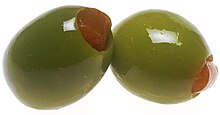
Green olives
Olive is the shade of dark yellow-green found on green olives. It has been commonly used by militaries around the world as a color for uniforms and equipment.
Computer web color greens
Green
| Green | |
|---|---|
| Color coordinates | |
| Hex triplet | #00FF00 |
sRGBB (r, g, b) | (00, 255, 00) |
| CMYKH (c, m, y, k) | (100, 0, 100, 0) |
| HSV (h, s, v) | (120°, 100%, 100%) |
| Source | X11 color names[38] HTML/CSS[1] |
B: Normalized to [0–255] (byte) H: Normalized to [0–100] (hundred) | |

Red, green and blue lights, representing the three basic additive primary colors of the RGB color system, red, green, and blue.
The color defined as green in the RGB color model, displayed on the right, is the brightest possible green that can be reproduced on a computer screen, and is the color named green in X11. It is one of the three primary colors used in the RGB color space along with red and blue. The three additive primaries in the RGB color system are the three colors of light chosen such as to provide the maximum range of colors that are capable of being represented on a computer or television set.
This color is also called regular green. It is at precisely 120 degrees on the HSV color wheel, also known as the RGB color wheel (Image of RGB color wheel). Its complementary color is magenta.
Another name for this color is green as opposed to the darker HTML/CSS green and the deeper pigment green, both shown below.
Green takes up a large portion of the CIE chromaticity diagram because it is in the central area of human color perception.
Green (HTML/CSS color)
| Green (HTML/CSS color) | |
|---|---|
| Color coordinates | |
| Hex triplet | #008000 |
sRGBB (r, g, b) | (0, 128, 0) |
| CMYKH (c, m, y, k) | (100, 0, 100, 50) |
| HSV (h, s, v) | (120°, 100%, 50%) |
| Source | HTML/CSS[1] |
B: Normalized to [0–255] (byte) H: Normalized to [0–100] (hundred) | |
The color defined as green in HTML/CSS color standard is displayed at right. It is the color called green, low green or medium green in many of the older eight-bit computer palettes.
Another name for this color is green W3C.
Dark green (X11)
| Dark green (X11) | |
|---|---|
| Color coordinates | |
| Hex triplet | #006500 |
sRGBB (r, g, b) | (0, 100, 0) |
| CMYKH (c, m, y, k) | (101, 102, 101, 67) |
| HSV (h, s, v) | (100°, 140%, 38%) |
| Source | X11[1] |
B: Normalized to [0–255] (byte) H: Normalized to [0–100] (hundred) | |
This is the X11/HTML color dark green.
Additional definitions of green
Green (CMYK) (pigment green)
| Green (CMYK) (pigment green) | |
|---|---|
| Color coordinates | |
| Hex triplet | #00A550 |
sRGBB (r, g, b) | (00, 165, 80) |
| CMYKH (c, m, y, k) | (100, 0, 100, 0) |
| HSV (h, s, v) | (149°, 100%, 65%) |
| Source | CMYK |
B: Normalized to [0–255] (byte) H: Normalized to [0–100] (hundred) | |

Cyan, magenta, and yellow are the three subtractive primary colors used in printing.
The color defined as green in the CMYK color system used in printing, also known as pigment green, is the tone of green that is achieved by mixing process (printer's) cyan and process (printer's) yellow in equal proportions. It is displayed at right.
The purpose of the CMYK color system is to provide the maximum possible gamut of color reproducible in printing.
The color indicated is only approximate as the colors of printing inks may vary.
Green (NCS) (psychological primary green)
| Green (NCS) | |
|---|---|
| Color coordinates | |
| Hex triplet | #009F6B |
sRGBB (r, g, b) | (0, 159, 107) |
| HSV (h, s, v) | (160°, 100%, 63%) |
| Source | sRGB approximation to NCS 2060-G[39] |
B: Normalized to [0–255] (byte) | |

Approximations within the sRGB gamut to the primary colors of the Natural Color System, a model based on the opponent process theory of color vision.
The color defined as green in the NCS or Natural Color System is shown at right (NCS 2060-G). The natural color system is a color system based on the four unique hues or psychological primary colors red, yellow, green, and blue. The NCS is based on the opponent process theory of vision.
The Natural Color System is widely used in Scandinavia.
Green (Munsell)
| Green (Munsell) | |
|---|---|
| Color coordinates | |
| Hex triplet | #00A877 |
sRGBB (r, g, b) | (0, 168, 119) |
| CMYKH (c, m, y, k) | (100, 0, 29, 54) |
| HSV (h, s, v) | (163°, 100%, 66%) |
| Source | Munsell Color Wheel |
B: Normalized to [0–255] (byte) H: Normalized to [0–100] (hundred) | |

The hues of the Munsell color system, at varying values, and maximum chroma to stay in the sRGB gamut.
The color defined as green in the Munsell color system (Munsell 5G) is shown at right. The Munsell color system is a color space that specifies colors based on three color dimensions: hue, value (lightness), and chroma (color purity), spaced uniformly in three dimensions in the elongated oval at an angle shaped Munsell color solid according to the logarithmic scale which governs human perception. In order for all the colors to be spaced uniformly, it was found necessary to use a color wheel with five primary colors—red, yellow, green, blue and purple.
The Munsell colors displayed are only approximate as they have been adjusted to fit into the sRGB gamut.
Green (Pantone)
| Green (Pantone) | |
|---|---|
| Color coordinates | |
| Hex triplet | #00AD83 |
sRGBB (r, g, b) | (0, 173, 131) |
| CMYKH (c, m, y, k) | (100, 0, 24, 32) |
| HSV (h, s, v) | (165°, 100%, 68%) |
| Source | Pantone TPX[40] |
B: Normalized to [0–255] (byte) H: Normalized to [0–100] (hundred) | |
Green (Pantone) is the color that is called green in Pantone.
The source of this color is the "Pantone Textile Paper eXtended (TPX)" color list, color # green C, EC, HC, PC, U, or UP—green.[41]
Green (Crayola)
| Green (Crayola) | |
|---|---|
| Color coordinates | |
| Hex triplet | #1CAC78 |
sRGBB (r, g, b) | (28, 172, 120) |
| CMYKH (c, m, y, k) | (84, 0, 30, 32) |
| HSV (h, s, v) | (158°, 84%, 68%) |
| Source | Crayola |
B: Normalized to [0–255] (byte) H: Normalized to [0–100] (hundred) | |
Green (Crayola) is the color called green in Crayola crayons.
Green was one of the original Crayola crayons introduced in 1903.
Other notable green colors
Army green
| Army green | |
|---|---|
| Color coordinates | |
| Hex triplet | #4B5320 |
sRGBB (r, g, b) | (75, 83, 32) |
| CMYKH (c, m, y, k) | (10, 0, 62, 67) |
| HSV (h, s, v) | (69°, 61%, 33%) |
| Source | [3] |
B: Normalized to [0–255] (byte) H: Normalized to [0–100] (hundred) | |
The color army green has been used in militaries since at least World War II, and possibly before, though the precise tint varies considerably between and within different nations. (See olive drab and olive green)
Bottle green
| Bottle green | |
|---|---|
| Color coordinates | |
| Hex triplet | #006A4E |
sRGBB (r, g, b) | (0, 106, 78) |
| CMYKH (c, m, y, k) | (100, 0, 26, 58[42]) |
| HSV (h, s, v) | (164°, 100%, 42[42]%) |
| Source | Encycolorpedia |
B: Normalized to [0–255] (byte) H: Normalized to [0–100] (hundred) | |
Bottle green is a dark shade of green, similar to pine green. It is a representation of the color of green glass bottles.
The first recorded use of bottle green as a color name in English was in 1816.[43]
Bottle green is a color in Prismacolor marker and pencil sets. It is also the color of the uniform of the Police Service of Northern Ireland replacing the Royal Ulster Constabulary's "rifle green" colored uniforms in 2001. It also the green used in uniforms for South Sydney High School in Sydney.[44]
Bottle green is also the color most associated with guide signs and street name signs in the United States.

Green bottles on a windowsill
Bottle green is also the background color of the Flag of Bangladesh, as defined by the government of Bangladesh.[45] Another name for this color is Bangladesh green.[46]
Bright green
| Bright green | |
|---|---|
| Color coordinates | |
| Hex triplet | #66FF00 |
sRGBB (r, g, b) | (102, 255, 0) |
| CMYKH (c, m, y, k) | (60, 0, 100, 0) |
| HSV (h, s, v) | (96°, 100%, 100%) |
| Source | Hexcode Color Chart |
B: Normalized to [0–255] (byte) H: Normalized to [0–100] (hundred) | |
Displayed on the right is the color bright green. Bright green is a bright shade of green. It is on the color wheel approximately one-third of the way between chartreuse green and harlequin (color #3FFF00) (closer to chartreuse green than to harlequin). Bright green represents a visual stimulus of 556 nanometers on the visual spectrum as measured on the CIE chromaticity diagram. The X11 color green is somewhat similar to bright green, with a hex triplet of 00FF00, compared to bright green's triplet of 66FF00.
The color bright green is used to represent bright green environmentalism[47] or the Viridian design movement.
Bright mint
| Bright mint | |
|---|---|
| Color coordinates | |
| Hex triplet | #4FFFB0 |
sRGBB (r, g, b) | (79, 255, 176) |
| CMYKH (c, m, y, k) | (69, 0, 31, 0) |
| HSV (h, s, v) | (153°, 68%, 100%) |
| Source | [Unsourced] |
B: Normalized to [0–255] (byte) H: Normalized to [0–100] (hundred) | |
Displayed at right is the color bright mint.
Brunswick green
| Brunswick green | |
|---|---|
| Color coordinates | |
| Hex triplet | #1B4D3E |
sRGBB (r, g, b) | (27, 77, 62) |
| CMYKH (c, m, y, k) | (65, 0, 20, 70) |
| HSV (h, s, v) | (162°, 65%, 30%) |
| Source | [Unsourced] |
B: Normalized to [0–255] (byte) H: Normalized to [0–100] (hundred) | |
Brunswick green is a common name for green pigments made from copper compounds, although the name has also been used for other formulations that produce a similar hue, such as mixtures of chrome yellow and Prussian blue. The pigment is named after Braunschweig, Germany (also known as Brunswick in English) where it was first manufactured. It is a deep, dark green, which may vary from intense to very dark, almost black.[48]
The first recorded use of Brunswick green as a color name in English was in 1764.[49] Another name for this color is English green. The first use of English green as a synonym for Brunswick green was in 1923.[50]
Deep Brunswick green is commonly recognized as part of the British racing green spectrum, the national auto racing color of the United Kingdom.
A different color, also called Brunswick green, was the color for passenger locomotives of the grouping and then the nationalized British Railways. There were three shades of these colors and they are defined under British Standard BS381C – 225, BS381C – 226, and BS381C – 227 (ordered from lightest to darkest). The Brunswick green used by the Nationalised British Railways – Western Region for passenger locomotives was BS381C – 227 (rgb(30:62:46)). RAL6005 is a close substitute to BS381C – 227. A characteristic of these colors was the ease for various railway locations to mix them by using whole pots of primary colors – hence the ability to get reasonably consistent colors with manual mixing half a century and more ago.
The color used by the Pennsylvania Railroad for locomotives was often called Brunswick green, but officially was termed dark green locomotive enamel (DGLE). This was a shade of green so dark as to be almost black, but which turned greener with age and weathering as the copper compounds further oxidized.[51]
Cal Poly Pomona green
| Cal Poly Pomona green | |
|---|---|
| Color coordinates | |
| Hex triplet | #1E4D2B |
sRGBB (r, g, b) | (30, 77, 43) |
| CMYKH (c, m, y, k) | (100, 0, 83, 47y) |
| HSV (h, s, v) | (137°, 61.0%, 30.2%) |
| Source | Cal Poly Pomona |
B: Normalized to [0–255] (byte) H: Normalized to [0–100] (hundred) | |
Cal Poly Pomona green is one of the two official colors of California State Polytechnic University, Pomona (Cal Poly Pomona). The official university colors are green (PMS 349) and gold (PMS 131). The Cal Poly Pomona Office of Public Affairs created the Cal Poly Pomona colors for web development and has technical guidelines, copyright and privacy protection; as well as logos and images that developers are asked to follow in the university's guidelines for using official Cal Poly Pomona logos. If web developers are using green on a university website, they are encouraged to use Cal Poly Pomona green. It is prominently used for representing Cal Poly Pomona's athletic teams, the Cal Poly Pomona Broncos.
Castleton green
| Castleton green | |
|---|---|
| Color coordinates | |
| Hex triplet | #00563B |
sRGBB (r, g, b) | (0, 86, 59) |
| CMYKH (c, m, y, k) | (90, 40, 83, 38) |
| HSV (h, s, v) | (164°, 100%, 34%) |
| Source | Castleton Colors |
B: Normalized to [0–255] (byte) H: Normalized to [0–100] (hundred) | |
Castleton green is one of the two official colors of Castleton University in Vermont. The official college colors are green (PMS 343) and white. The Castleton University Office of Marketing and Communications created the Castleton colors for web and logo development and has technical guidelines, copyright and privacy protection; as well as logos and images that developers are asked to follow in the college's guidelines for using official Castleton logos. If web developers are using green on a university website, they are encouraged to use Castleton green. It is prominently used for representing Castleton's athletic teams, the Castleton Spartans.
Celadon
| Celadon | |
|---|---|
| Color coordinates | |
| Hex triplet | #ACE1AF |
sRGBB (r, g, b) | (172, 225, 175) |
| CMYKH (c, m, y, k) | (24, 0, 22, 12) |
| HSV (h, s, v) | (123°, 24%, 88%) |
| Source | Encycolorpedia |
B: Normalized to [0–255] (byte) H: Normalized to [0–100] (hundred) | |
Celadon /ˈsɛlədɒn/ is a pale greyish shade of green.
According to dictionary.com, this pale green color can be traced to French literature of the 17th century. Celadon was the name of a character who wore green clothes in Honoré d'Urfé's novel L’Astree.[52]
A glaze of this color is commonly used in Chinese and Korean pottery.[53] It is normally associated with a pale sea-green pigment though the style originally was made with much darker pigments. The pale green pigment came from the artisans who used specific clays and potting techniques to create the style now associated with the name. It was most commonly used in Chinese, Korean and Japanese art and spread to the other Asian cultures. Celadon, as it is known by the west, or qingci, is an ancient type of Chinese glaze that was particularly favored at the Song court. These pots have blue-green glazes and are made in elegant shapes and were produced in kilns from all over China. Korean celadon pottery has been described by ancient Chinese artisans as having a quiet elegance whose color is "beyond description", in that it must be experienced to be understood, and its simplicity of form and style has been compared to the spirit of Zen Buddhism.[54]
Celadon green
| Celadon green | |
|---|---|
| Color coordinates | |
| Hex triplet | #2F847C |
sRGBB (r, g, b) | (47, 132, 124) |
| CMYKH (c, m, y, k) | (64, 0, 6, 48) |
| HSV (h, s, v) | (174°, 64%, 52%) |
| Source | Encycolorpedia |
B: Normalized to [0–255] (byte) H: Normalized to [0–100] (hundred) | |
Dark pastel green
| Dark pastel green | |
|---|---|
| Color coordinates | |
| Hex triplet | #03C03C |
sRGBB (r, g, b) | (3, 192, 60) |
| CMYKH (c, m, y, k) | (98, 0, 69, 25) |
| HSV (h, s, v) | (138°, 98%, 75%) |
| Source | Encycolorpedia |
B: Normalized to [0–255] (byte) H: Normalized to [0–100] (hundred) | |
Dartmouth green
| Dartmouth green | |
|---|---|
| Color coordinates | |
| Hex triplet | #00693E |
sRGBB (r, g, b) | (0, 105, 62) |
| CMYKH (c, m, y, k) | (100, 0, 91, 42) |
| HSV (h, s, v) | (152°, 100%, 44%) |
| Source | Brand Guide |
B: Normalized to [0–255] (byte) H: Normalized to [0–100] (hundred) | |
Dartmouth green is the official color of Dartmouth College, adopted in 1866. It was famously chosen after a crew race with a number of other colleges for being "the only decent color that had not been taken already".[55] It is prominently used as the name of the Dartmouth College athletic team, the Dartmouth Big Green. The Dartmouth athletic teams adopted this new name after the college officially discontinued the use of its unofficial mascot, the Dartmouth Indian, in 1974.
Dartmouth green and white are the main colors of Lithuanian basketball club Žalgiris Kaunas.
Emerald

An emerald
| Emerald | |
|---|---|
| Color coordinates | |
| Hex triplet | #50C878 |
sRGBB (r, g, b) | (80, 200, 120) |
| CMYKH (c, m, y, k) | (60, 0, 40, 22) |
| HSV (h, s, v) | (140°, 60%, 78%) |
| Source | Maerz and Paul[56] |
B: Normalized to [0–255] (byte) H: Normalized to [0–100] (hundred) | |
Emerald, also called emerald green, is a tone of green that is particularly light and bright, with a faint bluish cast. The name derives from the typical appearance of the gemstone emerald.
The first recorded use of emerald as a color name in English was in 1598.[57]
Ireland is sometimes referred to as the Emerald Isle due to its lush greenery. The May birthstone is emerald. Seattle is sometimes referred to as the Emerald City, because its abundant rainfall creates lush vegetation. In the Middle Ages, The Emerald Tablet of Hermes Trismegistus was believed to contain the secrets of alchemy. "Emerald City", from the story of The Wonderful Wizard of Oz, by L. Frank Baum, is a city where everything from food to people are emerald green. However, it is revealed at the end of the story that everything in the city is normal colored, but the glasses everyone wears are emerald tinted. The Green Zone in Baghdad is sometimes ironically and cynically referred to as the Emerald City.[58] The Emerald Buddha is a figurine of the sitting Buddha, made of green jade (rather than emerald), clothed in gold, and about 45 cm tall. It is kept in the Chapel of the Emerald Buddha (Wat Phra Kaew) on the grounds of the Grand Palace in Bangkok. The Emerald Triangle refers to the three counties of Mendocino, Humboldt, and Trinity in Northern California, United States[59]
because these three counties are the biggest marijuana producing counties in California and also the US.[59] A county-commissioned study reports pot accounts for up to two-thirds of the economy of Mendocino.[59]Emerald Cities: Urban Sustainability and Economic Development is a book published in 2010 by Joan Fitzgerald, director of the law, policy and society program at Northeastern University, about ecologically sustainable city planning.

Emerald crystals
During the 19th century, the arsenic-containing dye Paris green was marketed as emerald green.
Feldgrau
| Feldgrau | |
|---|---|
| Color coordinates | |
| Hex triplet | #4D5D53 |
sRGBB (r, g, b) | (77, 93, 83) |
| HSV (h, s, v) | (56°, 7%, 14%) |
| Source | Mindjunker |
B: Normalized to [0–255] (byte) | |
Feldgrau (field grey) was the color of the field uniform of the German Army from late 1907 until 1945, and the East German NVA armies. Metaphorically, feldgrau used to refer to the armies of Germany (the Imperial German Army and the Heer [army] component of the Reichswehr and the Wehrmacht).
GO Transit green
| GO green | |
|---|---|
| Color coordinates | |
| Hex triplet | #00AB66 |
sRGBB (r, g, b) | (0, 171, 102) |
| Source | [60] |
B: Normalized to [0–255] (byte) | |

A GO Transit train on the Lakeshore West line in Toronto, Canada
GO green was the color used for the brand of GO Transit, the regional commuter service in the Greater Toronto Area. Between 1967 and 2013, the brand and color that has adorned each of its train, buses, and other property generally remained unchanged.[61] It also matched the shade of green used on signs for highways in Ontario. In July 2013, GO Transit updated its look to a two-tone color scheme.[62]
Green-yellow
| Green-yellow | |
|---|---|
| Color coordinates | |
| Hex triplet | #ADFF2F |
sRGBB (r, g, b) | (173, 255, 47) |
| CMYKH (c, m, y, k) | (32, 0, 82, 0) |
| HSV (h, s, v) | (84°, 82%, 100%) |
| Source | X11[1] |
B: Normalized to [0–255] (byte) H: Normalized to [0–100] (hundred) | |
Green-yellow is a mixture of the colors green and yellow. It is a web color. It is a light tint of chartreuse.

A Crayola green-yellow crayon
"Green-yellow" is an official Crayola crayon color which was formulated in 1958.
Green-yellow is near the center of the light spectrum visible to the human eye, and is very eye-catching. For this reason many emergency vehicles and uniforms exhibit green-yellow.
Harlequin
| Harlequin | |
|---|---|
| Color coordinates | |
| Hex triplet | #3FFF00 |
sRGBB (r, g, b) | (63, 255, 0) |
| HSV (h, s, v) | (105°, 100%, 100%) |
| Source | Maerz and Paul[63] |
B: Normalized to [0–255] (byte) | |
Harlequin is a color described as being located between green and yellow (closer to green than to yellow) on the color wheel. On color plate 17 in the 1930 book A Dictionary of Color (see reference below), the color harlequin is shown as being a highly saturated rich color at a position halfway between chartreuse and green. Thus in modern color terminology, harlequin is the color halfway between green and chartreuse green on the RGB color wheel.
The first recorded use of harlequin as a color name in English was in 1923.[64]
Harlequin is a pure spectral color at approximately 552 nanometers on the visible spectrum when plotted on the CIE chromaticity diagram.[citation needed]
Silver Patron tequila is sold in harlequin-colored boxes.
Harlequin is also an adjective used to describe something that is colored in a pattern, usually a diamond-shaped pattern,[65] as in the dress traditionally associated with harlequins. Similarly, it can mean anything multicolored or prismatic, such as opals or other precious gems which are highly variegated in color and hue. In the early 2000s, a harlequin color paint was invented for automobiles that appears different colors from different angles of view.
Hunter green
| Hunter green | |
|---|---|
| Color coordinates | |
| Hex triplet | #355E3B |
sRGBB (r, g, b) | (53, 94, 59) |
| CMYKH (c, m, y, k) | (75, 0, 75, 75) |
| HSV (h, s, v) | (120°, 45%, 45%) |
| Source | ISCC-NBS #137 |
B: Normalized to [0–255] (byte) H: Normalized to [0–100] (hundred) | |
Hunter green is a color that is a representation of the color worn by hunters in the 19th century. Most hunters began wearing the color olive drab instead of hunter green about the beginning of the 20th century.[66] Some hunters still wear hunter green clothing or hunter green bandanas.
The first recorded use of hunter green as a color name in English was in 1892.[67]
Hunter green has been the official primary color of the Green Bay Packers since 1957, the New York Jets since 1998, one of the two official colors of Ohio University and Oswego State, and one of the two official colors of the Phi Kappa Psi fraternity.
In the bandana code of the gay leather subculture, a hunter green bandana, if worn on the left, indicates that one is a leather daddy, whereas if a hunter green bandana is worn on the right, it indicates that one is looking for a leather daddy, i.e., looking for a daddy-boy relationship.[68][69][70] The color displayed at upper right matches the color that is used in the bandana code.
Prison uniforms issued by the New York State Department of Corrections and Community Supervision are colored hunter green.[71]
India green
| India green | |
|---|---|
| Color coordinates | |
| Hex triplet | #138808 |
sRGBB (r, g, b) | (19, 136, 8) |
| CMYKH (c, m, y, k) | (100, 0, 70, 30) |
| HSV (h, s, v) | (115°, 94%, 53%) |
| Source | Vexillological[72] |
B: Normalized to [0–255] (byte) H: Normalized to [0–100] (hundred) | |
India green, the color of the lower band of the Indian National Flag, represents fertility and prosperity.
Islamic green
| Islamic green | |
|---|---|
| Color coordinates | |
| Hex triplet | #009000 |
sRGBB (r, g, b) | (0, 144, 0) |
| CMYKH (c, m, y, k) | (100, 0, 100, 44) |
| HSV (h, s, v) | (120°, 100%, 56.5%) |
| Source | Vexillological |
B: Normalized to [0–255] (byte) H: Normalized to [0–100] (hundred) | |
Islamic green is the shade of green used in the Flag of the Organisation of Islamic Cooperation.
Green symbolizes Islam because the tribe of the prophet Muhammad had a green banner and because green represented paradise to desert dwelling bedouin tribes when they gathered at an oasis.
Jade
| Jade | |
|---|---|
| Color coordinates | |
| Hex triplet | #00A86B |
sRGBB (r, g, b) | (0, 168, 107) |
| HSV (h, s, v) | (158°, 100%, 66%) |
| Source | [Unsourced] |
B: Normalized to [0–255] (byte) | |
Jade, also called jade green, is a representation of the color of the gemstone called jade, although the stone itself varies widely in hue.
The color name jade green was first used in Spanish in the form piedra de ijada in 1569.[73]
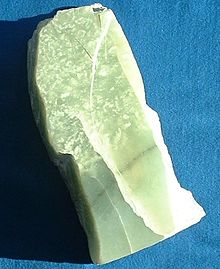
A slab of jade
The first recorded use of jade green as a color name in English was in 1892.[74]
Kelly green
| Kelly green | |
|---|---|
| Color coordinates | |
| Hex triplet | #4CBB17 |
sRGBB (r, g, b) | (76, 187, 23) |
| CMYKH (c, m, y, k) | (59, 0, 88, 27) |
| HSV (h, s, v) | (101°, 87%, 73%) |
| Source | [Unsourced] |
B: Normalized to [0–255] (byte) H: Normalized to [0–100] (hundred) | |
Kelly green is an American term. The name derives from the fact that the surname Kelly, as well as the color green, are both popular in Ireland. The use of the term as a color name occurred at least as far back as 1917.[75]
Malachite
| Malachite | |
|---|---|
| Color coordinates | |
| Hex triplet | #0BDA51 |
sRGBB (r, g, b) | (11, 218, 81) |
| CMYKH (c, m, y, k) | (60, 0, 40, 22) |
| HSV (h, s, v) | (140°, 95%, 85%) |
| Source | Maerz and Paul[76] |
B: Normalized to [0–255] (byte) H: Normalized to [0–100] (hundred) | |
Malachite, also called malachite green, is a color that is a representation of the color of the mineral malachite.

Polished malachite
The first recorded use of malachite green as a color name in English was in the 1200s (exact year uncertain).[77]
Midnight green
| Midnight green | |
|---|---|
| Color coordinates | |
| Hex triplet | #004953 |
sRGBB (r, g, b) | (0, 73, 83) |
| CMYKH (c, m, y, k) | (100, 15, 26, 70) |
| HSV (h, s, v) | (187°, 100%, 33%) |
| Source | [78] |
B: Normalized to [0–255] (byte) H: Normalized to [0–100] (hundred) | |
Midnight green (sometimes called Eagle green) is the official primary color of the Philadelphia Eagles of the National Football League.
MSU green
| MSU green | |
|---|---|
| Color coordinates | |
| Hex triplet | #18453B |
sRGBB (r, g, b) | (24, 69, 59) |
| CMYKH (c, m, y, k) | (82, 0, 64, 70) |
| HSV (h, s, v) | (111°, 116%, 44%) |
| Source | Brand Guide |
B: Normalized to [0–255] (byte) H: Normalized to [0–100] (hundred) | |
Green and white are the primary school colors representing Michigan State University. The university board of trustees officially standardized MSU green as part of a larger university branding effort, replacing a lighter green (PMS 341) used from 1997–2010. The official color was chosen based on the traditional darker Spartan green found on the original university varsity letter jackets and marching band jackets. The official green of Michigan State University is represented by Pantone Matching System ink color 567 (PMS 567).
Neon green
| Neon green | |
|---|---|
| Color coordinates | |
| Hex triplet | #39FF14 |
sRGBB (r, g, b) | (57, 255, 20) |
| CMYKH (c, m, y, k) | (77, 0, 92, 0) |
| HSV (h, s, v) | (111°, 92%, 100%) |
| Source | Internet |
B: Normalized to [0–255] (byte) H: Normalized to [0–100] (hundred) | |
Neon green is a bright tone of green used in psychedelic art and in fashion.
Office green
| Office green | |
|---|---|
| Color coordinates | |
| Hex triplet | #008000 |
sRGBB (r, g, b) | (0, 128, 0) |
| HSV (h, s, v) | (120°, 80%, 50%) |
| Source | HTML/CSS[1] |
B: Normalized to [0–255] (byte) | |
The conservative shade of green shown on the right, called office green, was the color designated as "green" in HTML, as opposed to the brighter X11 green.
Pakistan green
| Pakistan green | |
|---|---|
| Color coordinates | |
| Hex triplet | #006600 |
sRGBB (r, g, b) | (0, 102, 0) |
| HSV (h, s, v) | (120°, 100%, 40%) |
| Source | [Unsourced] |
B: Normalized to [0–255] (byte) | |
Pakistan green is a shade of dark green, used in web development and graphic design. It is also the background color of the Flag of Pakistan. It is almost identical to the HTML/X11 dark green in sRGB and HSV values.
Paris green
| Paris green | |
|---|---|
| Color coordinates | |
| Hex triplet | #50C878 |
sRGBB (r, g, b) | (80, 200, 120) |
| CMYKH (c, m, y, k) | (60, 0, 40, 22) |
| HSV (h, s, v) | (140°, 60%, 78%) |
| Source | [Unsourced] |
B: Normalized to [0–255] (byte) H: Normalized to [0–100] (hundred) | |
Paris green is a color that ranges from pale and vivid blue green to deeper true green. It comes from the inorganic compound copper (II) acetoarsenite and was once a popular pigment in artists' paints.
Persian green
| Persian green | |
|---|---|
| Color coordinates | |
| Hex triplet | #00A693 |
sRGBB (r, g, b) | (0, 166, 147) |
| CMYKH (c, m, y, k) | (80, 0, 22, 0) |
| HSV (h, s, v) | (135°, 75%, 60%) |
| Source | ISCC-NBS |
B: Normalized to [0–255] (byte) H: Normalized to [0–100] (hundred) | |
Persian green is a color used in Persian pottery and Persian carpets in Iran.
The first recorded use of Persian green as a color name in English was in 1892.[79][80]
Rifle green
| Rifle green | |
|---|---|
| Color coordinates | |
| Hex triplet | #444C38 |
sRGBB (r, g, b) | (68, 76, 56) |
| CMYKH (c, m, y, k) | (11, 0, 26, 70) |
| HSV (h, s, v) | (84°, 26%, 30%) |
| Source | Pantone TPX[81][82] |
B: Normalized to [0–255] (byte) H: Normalized to [0–100] (hundred) | |
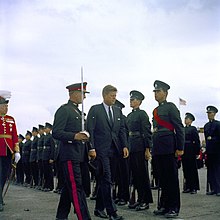
John Fitzgerald Kennedy, escorted by a Bermuda Militia Artillery officer in Royal Artillery blue No. 1 dress, inspects green-uniformed riflemen of the Bermuda Rifles in 1961
The color rifle green is displayed at right.
The source of this color is the Pantone Textile Paper eXtended (TPX) color list, color No. 19-0419 TPX—Rifle green.[83]
The first recorded use of rifle green as a color name in English was in 1858.[84]
Rifle green is so named from the distinctive color of the uniform of rifle regiments (a form of light infantry) of a number of European armies, and is still used as such by rifle regiments in many Commonwealth armies, such as the Rifles and Royal Gurkha Rifles of the British Army and the Queen's Own Rifles of Canada.
Rifle green was originally adopted by rifle regiments in the 18th century, including the famous 95th Rifles of the Napoleonic Wars. As the traditional role of riflemen was that of marksmen and skirmishers who attacked behind the cover of trees, a dark green uniform was adopted as an early form of camouflage, as opposed to the colorful uniforms worn by other soldiers of the period. The vegetable based dyes used during the 18th and early 19th centuries were not fast, frequently fading after exposure to the elements to lighter shades of green or even brown. While this had advantages in terms of reduced visibility on active service, it did not make for a smart appearance on the peace-time parade ground. Accordingly, the color of the rifleman's uniform was progressively darkened until it approached black. After 1890 the development of chemical dyes permitted the adoption of the stable shade of rifle green now worn. In the U.S. armed forces, the green beret may be worn only by soldiers awarded the Special Forces Tab, signifying they have been qualified as special forces soldiers. The special forces beret is officially designated "beret, man's, wool, rifle green, army shade 297". Previously, rifle green uniforms had been issued to Hiram Berdan's elite 1st United States Sharpshooters and 2nd United States Sharpshooters during the American Civil War.
Rifle green was the official uniform color of the Canadian Forces (CF) after unification; it was thereafter generally referred to as "CF green"; indeed, the service dress uniform of the day was referred to as "CF greens". After the introduction of the distinct environmental uniform (DEU), rifle green remained as the uniform color of the winter land environment DEU; a short-lived tan uniform was worn in summer. After the demise of the tans, the rifle green DEU was worn year-round. Rifle green was also the color of the uniform worn by the Northern Irish Royal Ulster Constabulary (RUC) until 2001 where the RUC was renamed the PSNI and while the uniform color remained the same, terminology changed to "bottle green".[85]
Rifle green is 19–0419 TPX in the Pantone palette, or hex code 444C38 in the sRGB color space, as shown above.
Russian green
| Russian green | |
|---|---|
| Color coordinates | |
| Hex triplet | #679267 |
sRGBB (r, g, b) | (103, 146, 103) |
| CMYKH (c, m, y, k) | (30, 0, 30, 43) |
| HSV (h, s, v) | (120°, 30%, 57%) |
| Source | ISCC NBS[86] |
B: Normalized to [0–255] (byte) H: Normalized to [0–100] (hundred) | |
The color Russian green is displayed at right.
The first recorded use of Russian green as a color name in English was in the 1830s (exact year uncertain).[87] The term appears to refer to the medium shade of green worn by most regiments of the Imperial Russian Army from 1700 to 1914.
Sacramento State green
| Sacramento State green | |
|---|---|
| Color coordinates | |
| Hex triplet | #043927 |
sRGBB (r, g, b) | (0, 78, 56) |
| CMYKH (c, m, y, k) | (89, 19, 72, 60) |
| HSV (h, s, v) | (164°, 100%, 34%) |
| Source | [88] |
B: Normalized to [0–255] (byte) H: Normalized to [0–100] (hundred) | |
In 2004, California State University, Sacramento rebranded itself as Sacramento State, while keeping the official name as the long form. In the process of rebranding a new logo was selected, and in 2005 it formalized the colors which it would use.[88]
Screamin' green
| Screamin' green | |
|---|---|
| Color coordinates | |
| Hex triplet | #76FF7A |
sRGBB (r, g, b) | (118, 255, 122) |
| CMYKH (c, m, y, k) | (137, 0, 133, 0) |
| HSV (h, s, v) | (156°, 100%, 62%) |
| Source | Crayola |
B: Normalized to [0–255] (byte) H: Normalized to [0–100] (hundred) | |
The color screamin' green is shown at right.
This color was renamed from ultra green by Crayola in 1990.
This color is a fluorescent color.
Sea green
| Sea green | |
|---|---|
| Color coordinates | |
| Hex triplet | #2E8B57 |
sRGBB (r, g, b) | (46, 139, 87) |
| CMYKH (c, m, y, k) | (81, 21, 83, 7) |
| HSV (h, s, v) | (146°, 67%, 55%) |
| Source | HTML/CSS |
B: Normalized to [0–255] (byte) H: Normalized to [0–100] (hundred) | |
Sea green is a color that resembles the sea floor as seen from the surface.
SGBUS green
| SGBUS green | |
|---|---|
| Color coordinates | |
| Hex triplet | #55dd33 |
sRGBB (r, g, b) | (85, 221, 51) |
| CMYKH (c, m, y, k) | (61.5, 0, 76.9, 13.3) |
| HSV (h, s, v) | (108°, 76.9%, 86.7%) |
| Source | HTML/CSS |
B: Normalized to [0–255] (byte) H: Normalized to [0–100] (hundred) | |
SGBUS green is the color voted by the public and used by Singapore to colour all its government-owned public buses.[89]
Spanish green
| Green (G&S) | |
|---|---|
| Color coordinates | |
| Hex triplet | #009150 |
sRGBB (r, g, b) | (0, 145, 80) |
| CMYKH (c, m, y, k) | (100, 0, 100, 0) |
| HSV (h, s, v) | (153°, 100%, 57%) |
| Source | Gallego and Sanz[90] |
B: Normalized to [0–255] (byte) H: Normalized to [0–100] (hundred) | |
Spanish green is the color that is called "verde" (the Spanish word for "green") in the Guía de coloraciones (Guide to colorations) by Rosa Gallego and
Juan Carlos Sanz, a color dictionary published in 2005 that is widely popular in the Hispanophone realm.
UNT green
| UNT green | |
|---|---|
| Color coordinates | |
| Hex triplet | #00853E |
sRGBB (r, g, b) | (5, 144, 51) |
| CMYKH (c, m, y, k) | (98, 0, 95, 22) |
| HSV (h, s, v) | (93°, 224%, 70%) |
| Source | UNT Identity Guide |
B: Normalized to [0–255] (byte) H: Normalized to [0–100] (hundred) | |
UNT green is one of three official colors used by the University of North Texas. It is the primary color that appears on branding and promotional material produced by and on behalf of the university.[91]
UP forest green
| UP forest green | |
|---|---|
| Color coordinates | |
| Hex triplet | #014421 |
sRGBB (r, g, b) | (1, 68, 33) |
| CMYKH (c, m, y, k) | (89, 44, 97, 52) |
| HSV (h, s, v) | (149°, 99%, 27%) |
| Source | UP Brandbook |
B: Normalized to [0–255] (byte) H: Normalized to [0–100] (hundred) | |
At the right is one of the official colors used by the University of the Philippines, designated as "UP forest green". It is based on the approved color specifications to be used for the seal of the university.[92]
Green in human culture
See also
- List of colors
References
^ abcdefghi "W3C TR CSS3 Color Module, HTML4 color keywords". W3.org. Retrieved 2011-06-13.
^ The New Encyclopædia Britannica. Chicago: Encyclopædia Britannica, 2002. ISBN 0-85229-787-4
^ The color displayed in the color box above matches the color called artichoke in the 1930 book by Maerz and Paul A Dictionary of Color New York:1930 McGraw-Hill; the color artichoke green is displayed on page 63, Plate 20, Color Sample B2.
^ Maerz and Paul A Dictionary of Color New York:1930 McGraw-Hill Page 189; Color Sample of Artichoke Green: Page 63 Plate 20 Color Sample B2
^ "PANTONE 18-0125 TPX Artichoke Green". Pantone. Retrieved 27 February 2016.
^ Maerz and Paul A Dictionary of Color New York:1930 McGraw-Hill Page 189
^ The color displayed in the color box above matches the color called fern green in the 1930 book by Maerz and Paul A Dictionary of Color New York:1930 McGraw-Hill; the color fern green is displayed on page 65, Plate 21, Color Sample F5.
^ Maerz and Paul A Dictionary of Color New York:1930 McGraw-Hill Page 195; color sample of Fern Green: Page 65 Plate 21 Color Sample F5
^ W3C. "SVG Color Keywords, CSS3 Color Module, W3C Candidate Recommendation 14 May 2003". Retrieved 2007-01-06.
^ Maerz and Paul A Dictionary of Color New York:1930 McGraw-Hill Page 195; color sample of Jungle Green: Page 69 Plate 23 Color Sample L6
^ The color in the color box above matches the color called green earth in Derwent colored pencils.
^ "Colour Chart – Hooker's Green". Retrieved 29 September 2011.
^ "Hooker's Green". Retrieved 29 September 2011.
^ "Hooker's green". Merriam-Webster. Retrieved 29 September 2011.
^ Maerz and Paul A Dictionary of Color New York:1930 McGraw-Hill Page 201; color sample of Jungle Green: Page 87 Plate 32 Color Sample L12 Note: The Color Sample shown as Jungle Green in Maerz and Paul is the color shown in the article on "jungle green" as dark jungle green.
^ The color displayed in the color box above matches the color called laurel green in the 1930 book by Maerz and Paul A Dictionary of Color New York:1930 McGraw-Hill; the color laurel green is displayed on page 67, Plate 22, Color Sample L1.
^ Maerz and Paul A Dictionary of Color New York:1930 McGraw-Hill Page 197; color sample of Laurel Green: Page 67 Plate 22 Color Sample L1. The color displayed in the color box above as "laurel green" matches the color shown in the color sample in Maerz and Paul
^ ""Bright Green, Light Green, Dark Green, Gray—The New Environmental Spectrum":". Worldchanging.com. 1999-02-22. Archived from the original on 2016-01-12. Retrieved 2011-06-13.
^ The color displayed in the color box above matches the color called moss green in the 1930 book by Maerz and Paul A Dictionary of Color New York:1930 McGraw-Hill; the color moss green is displayed on page 65, Plate 21, Color Sample L2.
^ Maerz and Paul A Dictionary of Color New York:1930 McGraw-Hill Page 199; Color Sample of Moss Green: Page 65 Plate 21 Color Sample L2
^ Color sample #164 on the ISCC-NBS color list is that tone of myrtle green which matches the color sample of myrtle green in the 1930 book A Dictionary of Color by Maerz and Paul (see color sample of Myrtle Green on Page 85 Plate 31 Color Sample L1).
^ Maerz and Paul A Dictionary of Color New York:1930 McGraw-Hill Page 199; Color Sample of Myrtle Green: Page 85 Plate 31 Color Sample L1
^ Maerz and Paul A Dictionary of Color New York:1930 McGraw-Hill Page 190; Color Sample of Pine Tree: Page 85 Plate 31 Color Sample L6
^ Overview of all RAL Classic colours. RAL gemeinnützige GmbH. Accessed January 2016.
^ Nikolas Davies, Erkki Jokiniemi (2008). Dictionary of Architecture and Building Construction. Amsterdam; Boston; London: Elsevier/Architectural Press. ISBN 9780750685023.
^ Vergnaud, Armand Denis; Toussaint, G. Alvar (1874). A Practical Treatise on the Manufacture of Colors for Painting: Comprising the Origin, Definition, and Classification of Colors; the Treatment of the Raw Materials Etc. H.C. Baird. p. 535. Retrieved 2 August 2018.
^ MacEvoy, Bruce. "handprint : colormaking attributes". www.handprint.com. Retrieved 2 August 2018.
^ "Sap Green". www.bobross.com. bobross.com. Retrieved 2 August 2018.
^ The color displayed in the color box above matches the color called shamrock in the 1930 book by Maerz and Paul A Dictionary of Color New York:1930 McGraw-Hill; the color shamrock is displayed on page 65, Plate 21, Color Sample C9.
^ Nicola Gordon Bowe. "Symbols of Ireland". Gov.ie. Archived from the original on 2011-06-14. Retrieved 2011-06-13.
^ Maerz and Paul A Dictionary of Color New York:1930 McGraw-Hill Page 204; Color Sample of Shamrock: Page 65 Plate 21 Color Sample C9
^ Guidelines for Use of the National Flag (PDF), published by the Irish Government and the Department of the Taoiseach. Document retrieved 3 April 2018
^ Library. "National Flag". www.taoiseach.gov.ie. Retrieved 2018-04-03.
^ "California Code, Government Code - GOV § 420 | FindLaw". Findlaw. Retrieved 2018-04-03.
^ I. Patterson, A Dictionary of Colour, Thorogood, 2003, ISBN 1-85418-247-1, page 381. "tea green – The greyish green of green tea."
^ Maerz and Paul A Dictionary of Color New York:1930 McGraw-Hill Page 205; Color Sample of Tea Green: Page 65 Plate 21 Color Sample C2
^ web.forret.com Color Conversion Tool set to hex code #808000 (Olive):
^ "X11 rgb.txt". Archived from the original on 2015-11-07. Retrieved 2008-02-05.
^ The sRGB values are taken by converting the NCS color 2060-G using the "NCS Navigator" tool at the NCS website.
^ Type the word "Green" into the indicated window on the Pantone Color Finder and the color will appear. There are six versions, all with the same color codes—C, EC, HC, PC, U, and UP.
^ "Pantone TPX Pantone Color Finder--Type the word "Green" into the indicated window on the Pantone Color Finder and the color will appear. There are six versions, all with the same color codes—C, EC, HC, PC, U, and UP.:". pantone.com.
^ ab Bottle green / #006a4e Hex Color Code Schemes, Charts, Palettes, Paints & RGB / CMYK / HSL Conversion:
^ Maerz and Paul A Dictionary of Color New York:1930 McGraw-Hill Page 190; Color Sample of Bottle Green: Page 85 Plate 31 Color Sample J7
^ "South Sydney High School | Uniform policy". www.sthsydney-h.schools.nsw.edu.au. Retrieved 2016-05-03.
^ PEOPLE'S REPUBLIC OF BANGLADESH FLAG RULES, 1972 (Revised up to 2005) Archived 2009-03-06 at the Wayback Machine., Government of Bangladesh, Cabinet Division
^ http://www.colorpicker.com/color/bangladesh-green
^ "Worldchanging – Evaluation + Tools + Best Practices: Bright Green, Light Green, Dark Green, Gray: The New Environmental Spectrum". worldchanging.com. Archived from the original on 2016-01-12.
^ Maerz and Paul A Dictionary of Color New York:1930 McGraw-Hill--Discussion of the color Brunswick Green Page 151
^ Maerz and Paul A Dictionary of Color New York:1930 McGraw-Hill Page 191; Color Sample of Brunswick Green (deep): Page 71 Plate 24 Color Sample A12
^ Maerz and Paul A Dictionary of Color New York:1930 McGraw-Hill Page 194; the color sample for English Green is noted as being the same as for Brunswick Green (deep): Page 71 Plate 24 Color Sample A12
^ (unknown) (1913). Modern Artist's Pigments, retrieved on December 13, 2005.
^ dictionary.com (phone app)
^ Shorter Oxford English Dictionary, 5th edition, Oxford University Press, (2002).
^ "The aesthetic beauty of Korean celadon" at Korean Arts
^ Ask Dartmouth Home >. "Ask Dartmouth". Ask.dartmouth.edu. Retrieved 2011-06-13.
^ The color displayed in the color box above matches the color called emerald green in the 1930 book by Maerz and Paul A Dictionary of Color New York:1930 McGraw-Hill; the color emerald green is displayed on page 75, Plate 26, Color Sample J10.
^ Maerz and Paul A Dictionary of Color New York:1930 McGraw-Hill Page 194; Color Sample of Emerald: Page 75 Plate 26 Color Sample J10
^ Chandraseekaran, Rajiv Imperial Life in the Emerald City: Inside Iraq's Green Zone 2007
^ abc Regan, Trish (2009-01-22). "Pot growers thrive in Northern California: Cash crop now accounts for two-thirds of Mendocino County economy". CNBC.
^ "Metrolinx" (PDF). Retrieved 2012-08-19.
^ "The design history of the GO Transit logo" (PDF). Retrieved 2012-08-19.
^ Wendy Gillis (2013-07-16). "GO Transit trains and buses get a makeover". Toronto Star. Retrieved 2014-07-20.
^ The color displayed in the color box above matches the color called harlequin in the 1930 book by Maerz and Paul A Dictionary of Color New York:1930 McGraw-Hill; the color harlequin is displayed on page 57, Plate 17, Color Sample K11.
^ Maerz, Aloys John; Paul, Morris Rea (1930). "A Dictionary of Color" (1st ed.). New York: McGraw-Hill: 57 plate 17 color sample K11; p. 196. OCLC 1150631.
^ Paterson, Ian (2003). A Dictionary of Colour (1st paperback ed.). London: Thorogood (published 2004). p. 198. ISBN 1-85418-375-3. OCLC 60411025.
^ Maerz and Paul A Dictionary of Color New York:1930 McGraw-Hill Page 162—Discussion of color Hunter Green
^ Maerz and Paul A Dictionary of Color New York:1930 McGraw-Hill Page 196; Color Sample of Hunter Green Page Plate 24 Color Sample C11—Hunter Green
^ Andrews, Vincent (2010), The Leatherboy Handbook, The Nazca Plains Corp., ISBN 978-1-61098-046-3
^ Hankycode on gaycitiusa.com Archived 2007-12-06 at the Wayback Machine. access date 2012-03-30
^ Hankycode on leathernjonline.com access date 2010-03-30
^ Beam, Christopher (December 3, 2010). "When did prisoners start dressing in orange?". Explainer (column). Slate. Retrieved October 31, 2017.
^ http://colors.findthedata.com/l/477/India-Green
^ Maerz and Paul A Dictionary of Color New York:1930 McGraw-Hill Page 162—Discussion of color Jade Green
^ Maerz and Paul A Dictionary of Color New York:1930 McGraw-Hill Page 197
^ Good Housekeeping 1917, Volume 64 page 58 --Retrieved from Google Books
^ The color displayed in the color box above matches the color called malachite in the 1930 book by Maerz and Paul A Dictionary of Color New York:1930 McGraw-Hill; the color malachite green is displayed on page 79, Plate 28, Color Sample A9.
^ Maerz and Paul A Dictionary of Color New York:1930 McGraw-Hill Page 198; Color Sample of Malachite Green: Page 79 Plate 28 Color Sample A9
^ "Team Colors – NFL". Ssur.org. Archived from the original on 2012-03-16. Retrieved 2011-06-13.
^ Maerz and Paul A Dictionary of Color New York:1930 McGraw-Hill Page 201; color sample of Persian green: Page 85 Plate 31 Color Sample H7
^ The source of this color is the ISCC-NBS Dictionary of Color Names (1955), a color dictionary used by stamp collectors to identify the colors of stamps, now on the Internet—see sample of the color Persian green (color sample #159) displayed on indicated web page: [1].
^ Type the words "Rifle green" into the indicated window on the Pantone Color Finder and the color will appear.
^ The color displayed in the color box above matches the color called Rifle green in the 1930 book by Maerz and Paul A Dictionary of Color New York:1930 McGraw-Hill; the color Rifle green is displayed on page 87, Plate 32, Color Sample A2.
^ "Pantone TPX Pantone Color Finder--Type the words "Rifle green" into the indicated window on the Pantone Color Finder and the color will appear". pantone.com.
^ Maerz and Paul A Dictionary of Color New York:1930 McGraw-Hill Page 203; Color Sample of Russian Green: Page 87 Plate 32 Color Sample A2
^ "BBC News – Patten Report". bbc.co.uk.
^ The color displayed in the color box above (color sample #136 on the ISCC-NBS color list) matches the color called Russian green in the 1930 book by Maerz and Paul A Dictionary of Color New York:1930 McGraw-Hill; the color Russian green is displayed on page 83, Plate 30, Color Sample D7.
^ Maerz and Paul A Dictionary of Color New York:1930 McGraw-Hill Page 203; Color Sample of Russian Green: Page 83 Plate 30 Color Sample D7
^ ab "Sacramento State Brand Book" (PDF). Sacramento State. Retrieved 2015-11-10.
^ "'Lush Green' picked as colour for new Singapore buses".
^ Gallego, Rosa; Sanz, Juan Carlos (2005). Guía de coloraciones (Gallego, Rosa; Sanz, Juan Carlos (2005). Guide to Colorations) Madrid: H. Blume. ISBN 84-89840-31-8
^ "Color | UNT Identity Guide". identityguide.unt.edu. Retrieved 2017-12-08.
^ [2] Archived July 23, 2011, at the Wayback Machine.
Web colors | |||||||||||||||||||||||||||||||||
|---|---|---|---|---|---|---|---|---|---|---|---|---|---|---|---|---|---|---|---|---|---|---|---|---|---|---|---|---|---|---|---|---|---|
Hexadecimal | |||||||||||||||||||||||||||||||||
| |||||||||||||||||||||||||||||||||
| |||||||||||||||||||||||||||||||||
 Category
 Portal
Color classifications | |||||||||||||||
|---|---|---|---|---|---|---|---|---|---|---|---|---|---|---|---|
*_Index">
| |||||||||||||||
| Color systems, standards and palettes |
| ||||||||||||||
| Color names (alphabetic) |
| ||||||||||||||
| Variations of base colors |
| ||||||||||||||
| |||||||||||||||


Color topics | ||||||||
|---|---|---|---|---|---|---|---|---|
| *_Orange *_Yellow *_Green *_Cyan *_Blue *_Indigo *_Violet *_Purple *_Magenta *_Pink *_Brown *_White *_Gray *_Black">
| ||||||||
| Color science |
|  | ||||||
| Color philosophy |
| |||||||
| Color terms |
| |||||||
| Color organizations |
| |||||||
| Lists |
| |||||||
| Related |
| |||||||
| ||||||||